
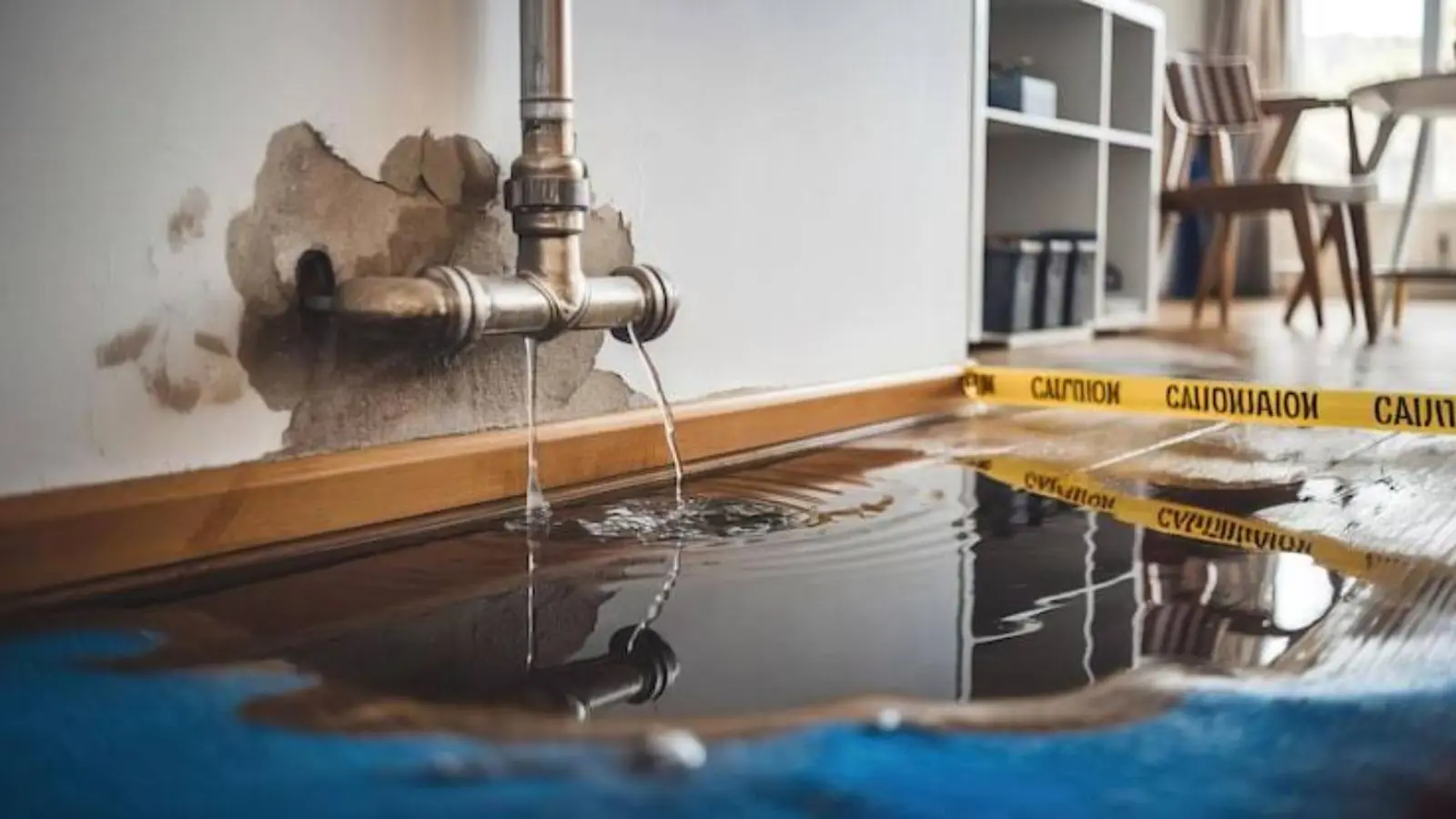
Water inside a wall almost never announces itself with a puddle. It shows up as a stain that appears slowly, a smell you cannot place or paint that starts to bubble. By the time you see damage, water may have been moving for weeks. Spotting the early signs is the cheapest repair you will ever make.
This guide lists the signs, shows how to confirm them and explains what to do next. If you already see water running or pooling, treat it as an emergency and read the emergency water removal page first.
Signs you can see, feel and smell
| Sign | What it often means | What to do |
|---|---|---|
| Paint bubbling or peeling | Moisture behind the paint | Check with a moisture meter and look for a source. |
| Brown or yellow stain that grows | A leak is active or recently dried | Photograph it with a coin for scale, and track growth. |
| Soft or crumbling drywall | Board has absorbed water for a while | Stop, call, and expect to replace it. |
| Musty smell | Damp materials, possible mold | Request a moisture reading and inspection. |
| Warped baseboard or trim | Water reached the wall base | Check the floor and wall cavity for moisture. |
| Cool, damp patch on a warm day | Evaporation from a wet wall | Use a thermal camera or moisture meter. |
Confirm it without tearing out the wall
A pin-type or pinless moisture meter reads wetness through the surface. Take readings along the wall and compare them with a dry wall in the same room. A thermal camera shows cool damp zones, which are often wet. Neither tool alone is proof, so a good assessment uses both and a visual check.
You can also test whether water is moving. Turn off all water use in the house, then watch the water meter. If the dial moves, water is going somewhere. Mark the stain edge with a pencil and check again in a day. A pencil line that the stain crosses tells you the leak is active.
Common sources of wall leaks
- A supply line or fitting inside the wall or at a fixture.
- A drain that leaks when it is used, such as a shower or tub drain.
- A window, door or siding gap that lets rain in.
- A roof leak that travels down inside the wall.
- A cold water line that sweats in humid weather.
Each source has a different fix. Plumbing is repaired by a plumber, a roof leak by a roofer, and siding or window leaks by an exterior contractor. After the source is fixed, the wall is dried as explained under water mitigation.
San Pedro note: your water bill is a clue
Water service in San Pedro comes from the Los Angeles Department of Water and Power, which also posts news releases when a water main break affects the neighborhood. If your bill jumps with no change in use, a hidden wall leak is one of the first things to check. Compare the usage on this bill with last year's same month.
On the Palos Verdes side, the water utility for most addresses is the Palos Verdes system of California Water Service, and the same approach applies. Read the name on your bill, since the right company to call about the meter depends on it.
After you confirm it
Stop the source, photograph the damage and get readings. A wet wall typically needs to be opened so that insulation and framing can dry. If readings are low, drying in place may be enough. If drywall has softened, it comes out. The repair page covers the rebuild.
In Wilmington and Harbor City, many walls are shared with neighbors, so tell the neighbor if you suspect the leak is theirs. Early notice limits the damage on both sides.
What to do once you confirm moisture
Find the source
Check supply lines, drains, windows and the roof above the wall.
Stop the water
Close the valve or arrange the repair before any drying starts.
Open the wall
A small inspection hole shows insulation and framing condition.
Dry and verify
Fans and a dehumidifier run until readings match a dry reference.
Do not close a wall that still reads wet. Trapped moisture is how a repaired wall turns into a mold problem months later.
Keep a photo log of the wall each week for a month after repair.
Mark the edges of any stain with a pencil and a date. If the line moves, water is still arriving. A moving edge is a stronger signal than a stain that stays put, and it tells a crew where to start looking.
Suspect water in a wall? Call and ask about moisture readings.
☎ Call (424) 550-5662Questions about water inside walls
How long can water sit in a wall before it causes mold?
Mold can start within a day or two when materials stay wet, which is why early drying matters.
Can I just paint over a stain?
Not until the wall is dry and the source is fixed. Paint over moisture traps it and fails.
How do I check my water meter for a hidden leak in San Pedro?
Turn off all water use, then watch the meter dial. If it moves, water is going somewhere. Ask LADWP or your provider how to read your meter.
Is a moisture meter reading enough?
It is a good start, but a second tool or a visual check improves accuracy.
Will insurance cover a hidden leak?
Sudden leaks are often covered, and slow leaks often are not. Ask your insurer.