
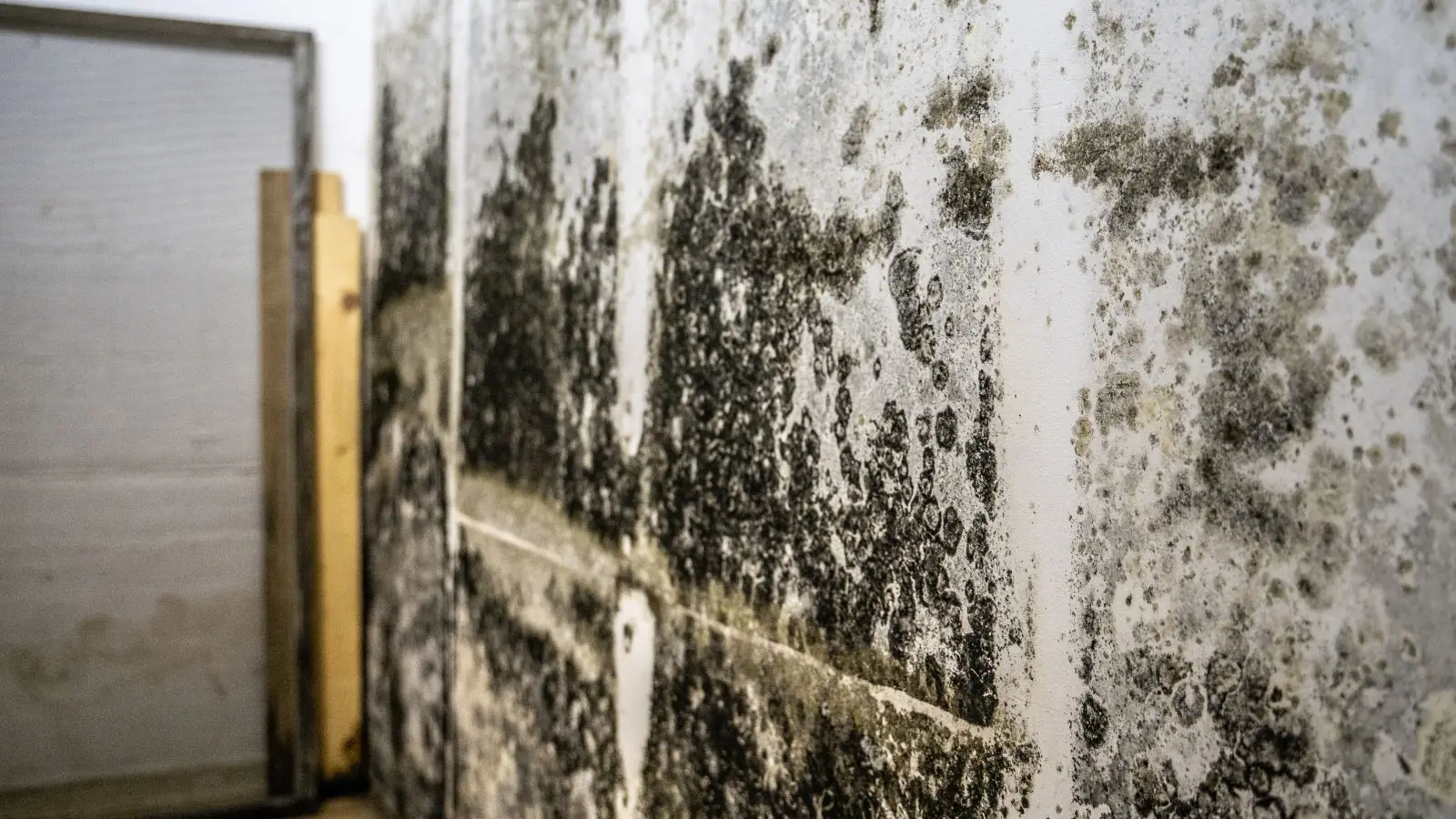
People ask how to kill basement mold, and the honest answer is that killing it is the smaller half of the job. Dead mold can still leave stains, and mold that has grown into porous material cannot be cleaned out by a spray. The part that matters is fixing the moisture and removing what the mold has grown into.
This guide covers lower-level rooms, garages and crawl spaces. It does not cover health effects, which are a matter for a physician. If you are looking at a large area, skip to the section on when to call a crew.
What actually works on small surface mold
On hard, non-porous surfaces such as concrete, tile, glass or sealed metal, detergent and water with a scrub brush usually removes visible mold. Let the surface dry fully afterward, then watch for regrowth. Wear a fitted respirator, gloves and goggles, and ventilate the room with a fan blowing out.
Never mix bleach with ammonia or other cleaning products, since the combination produces harmful gas. Household cleaners may lighten a stain, but they do not reach into wood, drywall or insulation, so mold in those materials normally needs removal.
| Surface | Usually workable by the homeowner? | Typical approach |
|---|---|---|
| Tile, glass, sealed metal | Yes, for small areas | Detergent and water, then dry |
| Painted concrete | Often | Scrub, rinse and dry, then fix the moisture |
| Unfinished wood framing | Sometimes, for surface growth | Cleaning after drying, and sealing if appropriate |
| Drywall and insulation | No | Removal and replacement under containment |
| Carpet and padding | No | Removal and disposal |
What does not work
- Painting over mold with ordinary paint, which traps moisture and mold underneath.
- Spraying fragrance or fogging products, which only mask the smell.
- Cleaning the surface without drying the room, so growth returns within weeks.
- Disturbing a large patch with a household vacuum, which can spread spores.
Moisture is the real fix
Mold needs moisture, so the fix is to find the source. Look for a leaking pipe, a failed seal around a window well, a gutter that dumps water against the foundation, a condensate line or a damp slab. A dehumidifier helps once the source is stopped, and a hygrometer shows whether the room stays humid.
If a flood or a leak caused the damp, the structure may still hold water. The water mitigation page explains moisture mapping, and the flood restoration page covers storm and groundwater events.
San Pedro note: use the dry months
San Pedro receives most of its rain from January through March, when each month averages roughly three inches, and June through August are nearly dry. Lower-level rooms are at their driest in late summer, which makes it the best time to fix drainage, seal cracks and run a dehumidifier. Winter storms are the test of whether the fix worked.
Whether your state licenses mold work and what a contractor must show is something to check with the state agency that regulates contractors, since rules change. Ask for a written scope before you hire anyone.
When to call a crew
Call a crew if the mold covers more than a small patch, if it is on drywall or insulation, if it keeps coming back or if a musty smell fills the room with no visible source. A professional assessment includes moisture readings, containment and removal that follows the ANSI/IICRC S520 standard. You can ask any company whether its crews work to it.
Calls from Harbor City and Lomita often involve rented units, where the landlord should be told in writing. The mold page explains how remediation proceeds.
Why spraying a killer is not the plan
Dead mold can still trigger reactions and still stains. The goal is removal and a dry room, not a chemical result. Fogs, sprays and sealers leave the material in place and can hide a moisture source that keeps feeding growth.
Hard, nonporous surfaces such as concrete and sealed tile can be cleaned with detergent and water. Porous materials such as drywall, carpet and insulation usually come out. After removal, drying and a humidity check show whether the room is ready for repair.
Signs the job is done
- No visible growth remains on any surface.
- The musty smell is gone after the room is aired out.
- Moisture readings match a dry reference.
- Humidity stays in the target range for several weeks.
A final walk through the room a month later is worthwhile. Look at corners, the base of walls and the back of shelves, and run a hand along the lowest drywall edge. Catching a small return early keeps a repeat project small.
Mold in a lower-level room? Call to describe it and ask about an assessment.
☎ Call (424) 550-5662Questions about basement mold
Does bleach kill mold on drywall?
It does not reach into porous drywall, so growth in the material normally means replacing it.
Can I use a dehumidifier to kill mold?
It does not kill mold, but it removes the moisture that mold needs. Use it after the source is fixed.
Is a musty basement always moldy?
Not always, but a musty smell usually signals damp materials. Check with a moisture meter.
When should I replace carpet in a damp lower level?
If it has stayed wet more than a day or two or smells musty, replacement is usually safer than cleaning.
Do San Pedro homes need extra ventilation in lower rooms?
Mild coastal weather rarely dries a damp room, so mechanical ventilation and dehumidifying matter more than open windows.