
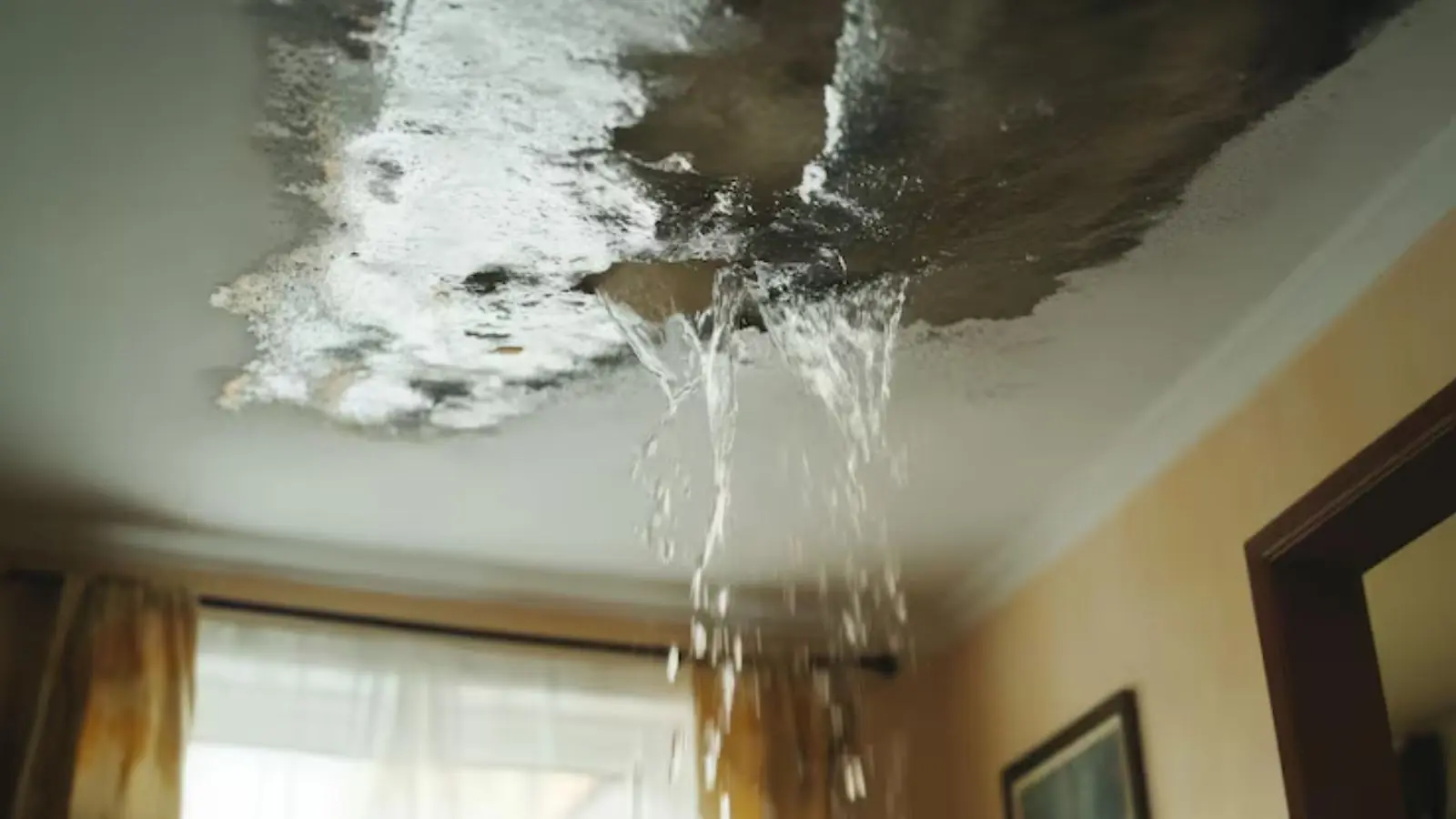
A ceiling that is wet is holding water above it, so gravity is waiting to finish the job. A stain is a warning. A bulge is a danger. A ceiling that is dripping is an active leak that needs to be stopped. Treat all of them as time sensitive, and treat anything that sags as unsafe to stand under.
This guide covers what to do in the first minutes, how to judge the damage and how the ceiling is repaired. The leak source may be a roof, an upstairs bath, a supply line or an air conditioner condensate line, and each has a different fix.
The first minutes
Stay clear
Do not stand under a bulge or a sagging section. Water-heavy drywall can fall without warning.
Move belongings
Lift furniture, electronics and rugs out of the drip path. Put a bucket under the flow.
Think about power
If water is near a light fixture, leave the fixture off. Turn off power at the panel only from dry ground.
Call the line
Describe the ceiling, the room above and how long it has been leaking.
If the ceiling is dripping, the source is above it. In a house, that is the roof or an upstairs fixture. In a multi-story building, the neighbor above may need to shut off a valve, so tell the manager at once.
How bad is it? A quick framework
| What you see | What it likely means | What happens next |
|---|---|---|
| Light brown ring, dry to the touch | An old or brief leak | Find the source, confirm dryness and repaint with primer. |
| Damp stain that grows | An active leak | Stop the source and dry the area. |
| Bulge or sag | Water trapped above the drywall | Stay clear, release safely by a crew and dry. |
| Hole or collapse | Drywall failed | Treat as unsafe, clear debris with a crew and rebuild. |
How a ceiling is repaired
After the leak is stopped, the crew checks the ceiling and the space above it with moisture meters. Wet insulation is removed, damaged drywall is cut back to dry sound board, and the structure is dried. New board is hung, taped and textured, and the ceiling is primed with a stain-blocking primer before paint.
The finish is the hard part. Matching texture on an older ceiling takes extra steps, and painting the whole ceiling to the nearest edge hides the repair better than a spot patch. The repair page covers the rebuild in more detail.
San Pedro note: storms test the roof
San Pedro's wet season runs from January through March, and each of those months averages roughly three inches of rain, while summer months are nearly dry. A roof that held up through summer can reveal weak flashing during the first heavy storm. After a storm, check upstairs ceilings and attics for damp spots.
A roof repair is done by a roofer, and the ceiling is repaired after the structure has dried. Ask the Los Angeles Department of Building and Safety whether your roofing or framing work needs a permit.
Ceiling mold and insulation
A ceiling that stays damp can grow mold, and wet insulation above it holds water against the drywall. If you see dark patches, read the mold page and ask for an assessment before painting. Wet insulation almost always comes out.
In hillside homes in Rancho Palos Verdes and older multi-unit buildings in Harbor City, the source can be several rooms away from the stain, because water follows framing before it drips.
What to photograph for the claim
- The stain or sag from the floor and from several angles.
- The room above, the fixture or the roof area, if safe to see.
- Any wet belongings before they are moved.
- A date stamp or note showing when you first saw the damage.
Keep damaged pieces if the adjuster asks to see them. Do not throw away drywall that fell until you have photos, and avoid cleanup that destroys evidence of the source. Your crew can place drying equipment and still leave the area documented.
After the ceiling is dry
Once readings match a dry reference, the repair can move quickly. Replace insulation that was wet, hang new board, tape and texture it, and prime before paint. Give each coat time to cure. A ceiling closed too early can stain again and send you back to the start.
Do not repaint to hide a stain you have not explained. A fresh coat over a damp ceiling traps moisture, and the mark usually returns within weeks. Let the readings, not the color, tell you when the ceiling is ready.
Ceiling sagging or dripping? Call the 24/7 line now and stay clear of the area.
☎ Call (424) 550-5662Questions about water damaged ceilings
Should I poke a hole in a bulging ceiling?
It is risky, because the ceiling may fall and the water may touch wiring. Stay clear and call a crew who can release it safely.
Can a stained ceiling be saved without replacing it?
If it is dry and firm, it can often be primed and repainted. Soft or sagging board should be replaced.
How soon do I need to act in San Pedro?
Act the same day. Water above a ceiling keeps spreading, and mold can start within a day or two.
Will my insurance cover a ceiling leak?
Sudden leaks are often covered. Slow leaks and roof wear often are not. Ask your insurer.
Who fixes the roof?
A roofer does. The interior repair follows after the structure is dry.